How many emails have you deleted today? Ten? Thirty? And how many handwritten cards landed on your doormat?
Exactly.
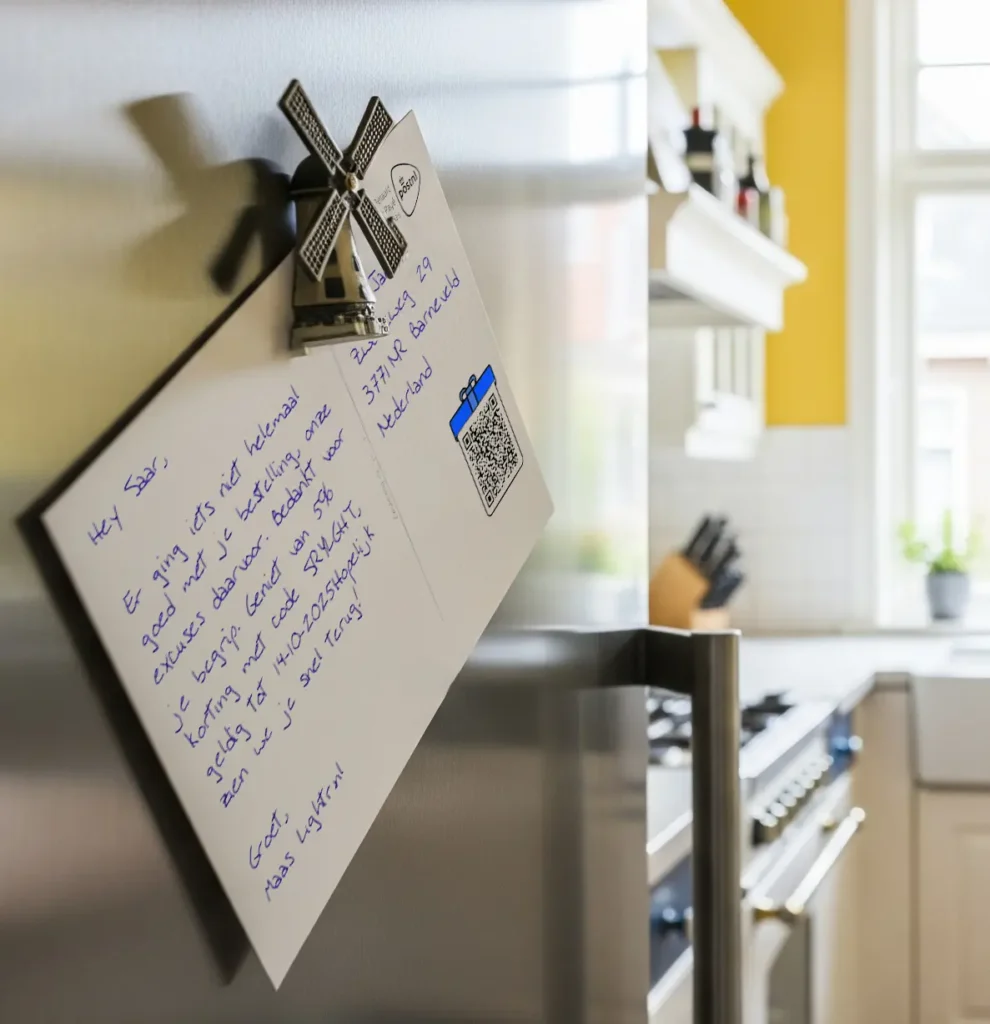
The inbox is overflowing, while the doormat is empty. That doesn’t make a card old-fashioned; it makes it smart. A card doesn’t get clicked away. It gets read, and on average stays on a desk or kitchen table for up to 70 days. All that time, you’re visible to your customer.
Why now?
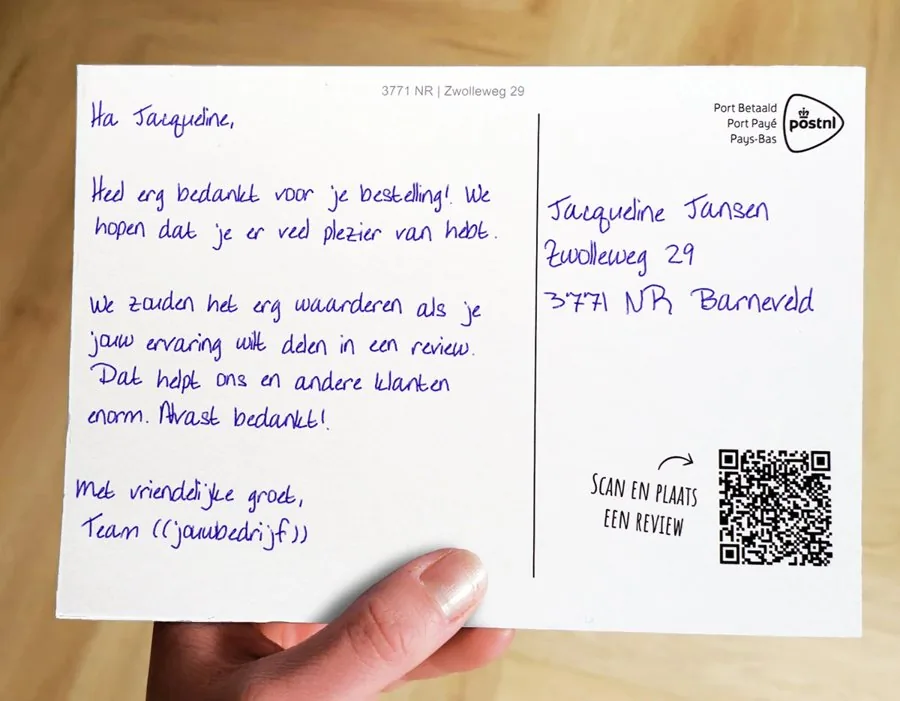
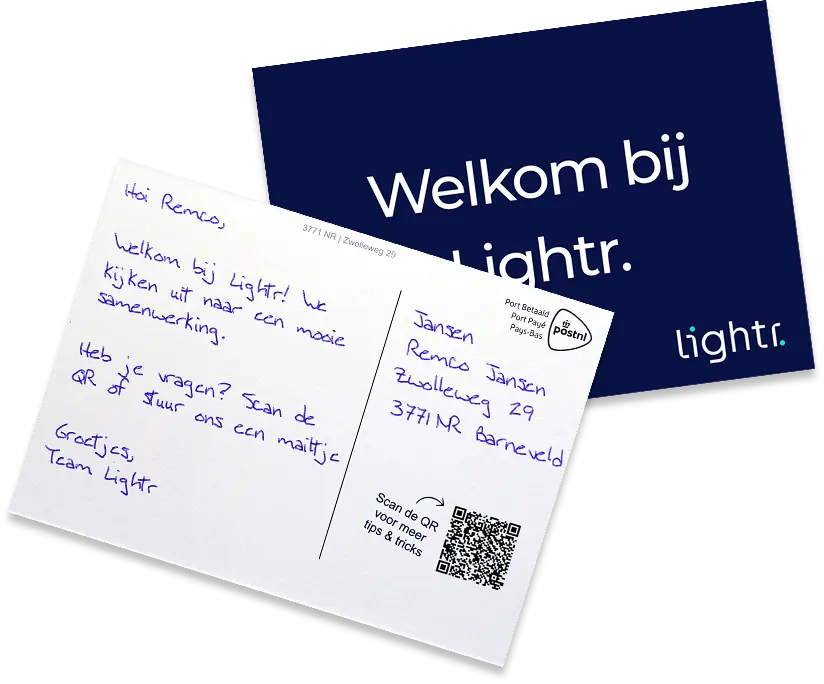
The card that brought you here proves the point. You held it, turned it over and scanned it.
There’s another reason you received this card: the Lightr platform has been completely renewed. Based on customer feedback, we’ve worked on more convenience, more control and more possibilities, so you can easily stay visible at the moments that matter. You’ll hear more about it in your inbox over the coming weeks.
But first, the question that really matters: when should you send a card? Below, we walk you through eight moments when a card does more than an email. Not theory, but situations you’ll recognise straight away.
Summer: stay visible while others go quiet
In many businesses, the same thing happens every year as soon as summer starts. Diaries empty out, projects get pushed back to September and customers have their minds on other things.
Which is exactly why it’s a good moment to get in touch.
Not with a newsletter that gets lost among dozens of other emails, but with something that literally lands on the doormat. A short card with a summer greeting asks nothing of the recipient. No offer, no agenda and no obligation:
“Wishing you a lovely summer and a relaxing holiday. Thank you for your trust so far, and we’ll speak again soon.”
Yet a card like that keeps you visible at a time when many competitors go quiet. And when the holidays are over and new plans are being made, there’s a good chance your name is still lying on someone’s desk.
The first few days often set the tone for the whole relationship
Think back to the last time you were new somewhere. A new supplier, a new gym or a new job. You remember those first few days.
It’s just the same for your customers. Digital onboarding is efficient, but it can quickly feel impersonal: a confirmation email, an invoice and a login link. Functional, but not exactly warm.
A welcome card turns that around. After a first purchase, a first appointment or the start of a working relationship, a card shows someone they’re more than just a number:
And it doesn’t just work for customers. A welcome card for a new employee, landing on their doormat at home before their first day even starts, makes exactly the same difference.
“Memorable moments”: from customer birthdays to every moment that counts
Some moments aren’t about you at all, but purely about your customer. A birthday. The day someone has been your customer for a year. An anniversary, or a purchase made exactly a year ago.
These are the best moments to get in touch, precisely because there’s nothing to sell. The moment does the work, not a discount. The warmth comes from simply being there:
“Happy birthday! Wishing you a wonderful day, and we’re so glad to have you as a customer.”
And here’s the best part: you already have the date. The date of birth is in their file, the customer-since date is in your CRM and the purchase date is in your system. There’s nothing to collect, so you can start today.
In practice, it works like this: with one upload, you schedule all your customer moments for the whole year ahead. Or you use the Lightr webhook, so a card goes out automatically as a customer moment approaches, based on the trigger in your CRM. You set it up once, and from then on every moment gets marked.
No dates of birth in your system? You’ll still have the customer-since date, a purchase date or an anniversary. Every sender has at least one moment in their data.
A complaint doesn’t have to be the end
Nobody likes sending post to a customer who has just complained. Yet that’s exactly when a card has the biggest impact, and in a good way.
Because once the problem is solved, customers don’t expect anything more. The complaint has been dealt with and that’s that. A handwritten card landing on the doormat at that point is an unexpected, personal gesture. It shows the complaint was genuinely heard:
“Things didn’t go quite as they should have, and we’re sorry about that. Thank you for your patience. As a small way of making amends: [gift/discount code]. We hope to see you again soon.”
This isn’t just an assumption. A Lightr customer sent a handwritten card to customers after resolving their complaint. 6.75% of recipients ordered again via the QR code or discount code, and the QR code was still being scanned up to 53 days after sending. The card was even mentioned by name in reviews.
The trick was its simplicity: one scan put the unique discount code straight into the basket. Barely any effort for the customer, and fully measurable too.
New customers are expensive. Forgetting existing ones costs more.
Most marketing budgets go on winning new customers. But take an honest look at the figures and you’ll see the profit often lies elsewhere: with the customers you already have.
A customer who has just placed their first order. A customer who hasn’t bought anything in three months. A customer who has been with you for exactly a year. These are all moments when a card can make the difference between a one-off order and a regular customer:
“Thank you for your order! We hope you’re happy with it. To say thanks, here’s [offer or code] for your next purchase, valid until [date].”
A quick tip from experience: add an end date. Urgency prompts action, without the card coming across as pushy.
Sometimes one card is enough to reopen a conversation
Every customer base has them: the dormant contacts. Relationships that used to be good, but have gone quiet. Not because of a falling-out; things just drifted.
Cold calling feels awkward, and a sales email gets deleted. But a card doesn’t feel like prospecting, because the relationship is already there:
“We haven’t seen you for a while, and we’ve missed you. Quite a lot has changed here, and we think you’ll find it interesting. Fancy a quick catch-up?”
If you really want to make it count, follow up with a call. Calling after the card can double or even triple conversion. The card gives you a natural reason to get in touch, especially if you can see that someone has scanned the QR code.
Happy customers are often more than willing to leave a review
They just don’t get round to it on their own.
Not because they don’t want to; it just slips their mind. Standard review requests by email vanish into the same overflowing inbox as everything else. A personal card, sent just after a positive experience, cuts through that:
Timing is everything here: after a finished job, a delivery or a good conversation, right when satisfaction is at its peak. The QR code makes it as easy as possible, because one scan takes your customer straight to the review page.
Let the year work for you
If you have to come up with a new reason to send something every quarter, you’re making life unnecessarily hard for yourself. The year is already full of natural moments: summer, getting back to work after the holidays, Black Friday, Sinterklaas, Christmas, New Year and spring.
Customers recognise these moments instantly, so you don’t need to invent a reason. And because they come round every year, you schedule them once and repeat what works:
“The year is nearly over, so it’s time to pause for a moment. Thank you for working with us this year. Wishing you a wonderful festive season, and we look forward to next year!”
This works especially well for seasonal businesses: a gardener peaks in spring, an installer in winter. So time your moment for when your customer thinks of you, or ought to.
Three things almost every successful card campaign has in common
One goal per card. A card that tries to do two things at once, such as a demo and a review, or an offer and an invitation, usually achieves neither. So pick one message and one call to action. Everything else belongs behind the QR code, not on the card.
A QR code that leads somewhere. Literally: not to your homepage, but to a specific page that matches the goal. Think of the review page, the offer page or a basket with the code already applied. The card converts better, and you know exactly what it delivers.
Test first, then scale up. Try out different images, texts and CTAs. The difference between variants is bigger than you’d think, and testing stops a good campaign from being written off unfairly.
Which campaign could you send this month?
Eight moments, and chances are at least two of them made you think: that’s us. Maybe it’s the summer greeting you could still send this week, or the birthdays that have been sitting in your system for years.
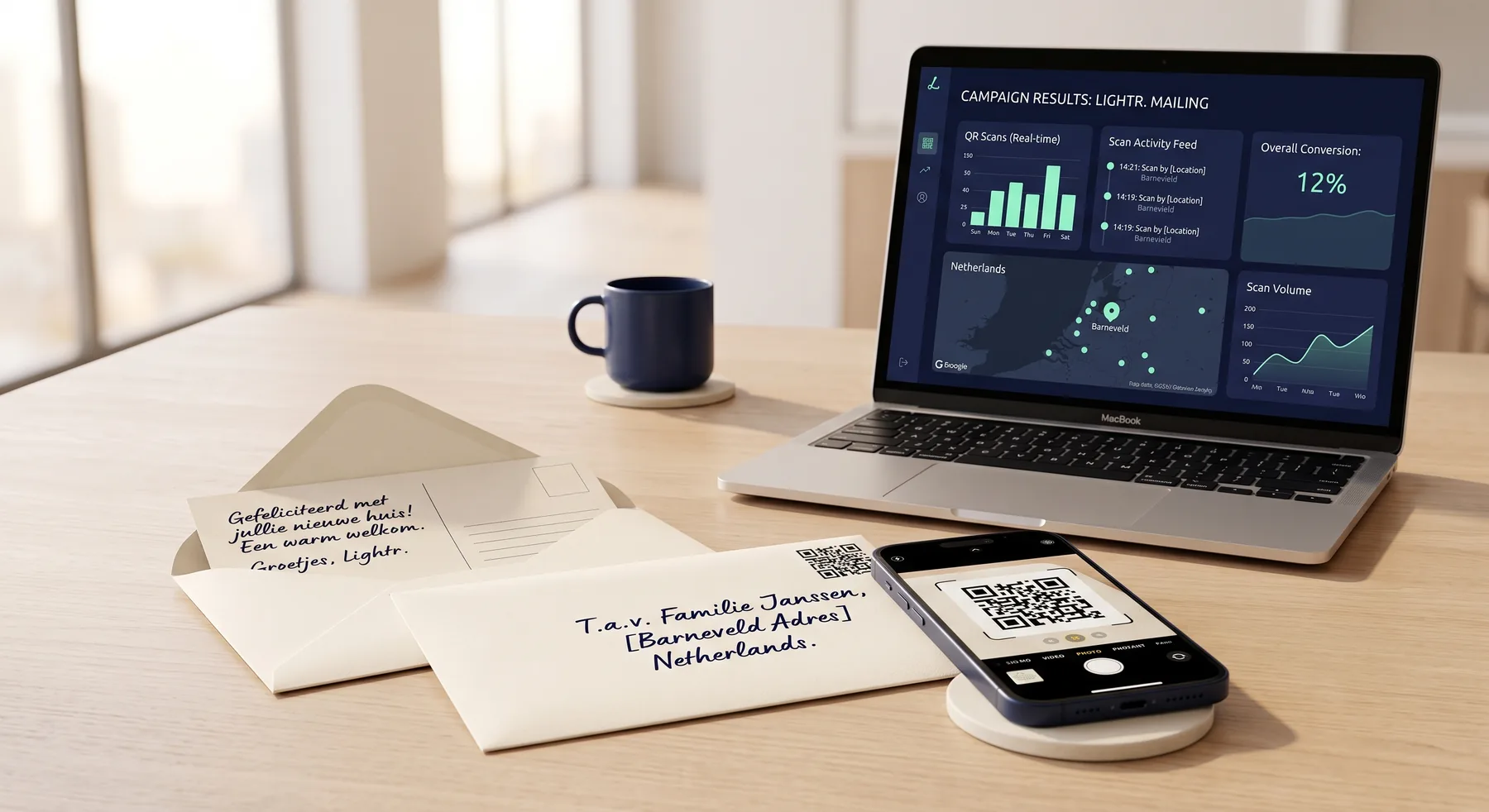
The renewed Lightr platform makes it easier than ever to go from idea to campaign. You design your card, connect your address list or CRM and use QR tracking to see exactly what your campaign delivers. Over the coming weeks, we’ll email you more about everything that’s new, so keep an eye on your inbox.
Team Lightr
Further reading.
The Reality of Black Friday: The Battle for the Inbox
Black Friday: the peak moment for sales, but also the moment digital "spam" becomes unbearable. Your inbox, your social feeds and even your display ads are flooded with one simple message: "BUY NOW! DISCOUNT!"The reality is that the fight for a few seconds of screen time in the last two weeks of November has become unaffordable
From invisible to unforgettable: real attention for your customers
Sound familiar? You do everything you can to win customers, but once they’ve bought something, it all goes quiet. Emails sit unopened in inboxes and customers soon feel like just a number. Yet that’s exactly the moment loyalty is won or lost.Handwritten cards from Lightr change all that. Because people forget what you say, they
The effect of appreciation
Feeling appreciated matters to everyone, temporary workers included. And temporary workers who feel appreciated are worth their weight in gold to your organisation.
Which moment will you make personal?
More reviews, customers who come back or a welcome that sticks. Choose your moment, and Lightr writes the card with a real pen and sends it on time.
- No credit card required
- No subscription
- From a single card